Hester Gray
Anne of AvonleaHester Gray is a young woman whose brief life in Avonlea survives in the garden her husband made for her and in the care Anne Shirley continues to show her grave. Through the remembered account of Hester’s marriage, illness, and death among her flowers, the garden becomes more than a remnant of the past: it is a place where private affection remains visible, and where Anne’s imagination treats remembrance as an ongoing bond.
Identity and Background
Hester Gray, formerly Hester Murray, came from a rural upbringing and worked in a store in Boston, a life she disliked. When Jordan Gray asked her to marry him, she agreed on the condition that he take her somewhere quiet, among fields and trees. He brought her to Avonlea, where his father gave the couple a farm. The story of this move is not presented directly by Hester but recounted by Diana Barry during a visit to the remains of her garden; Diana attributes much of what she knows to her mother and Rachel Lynde, who had known Hester.
Hester’s story enters the novel through a striking discovery. On a September outing, Anne and Diana, with Priscilla Grant, reach an overgrown garden behind the farms along the upper Carmody road. A mossy stone boundary and traces of paths and rosebushes mark its former design, while narcissi have spread across much of the grass. Diana identifies it as Hester’s garden, a place she had heard about but had never seen. The garden’s survival prompts the friends to recover a life that, Diana says, most people have forgotten.
Marriage and Life in Avonlea
Hester and Jordan lived in the little house he built at the farm for four years. She seldom went out, and few people visited apart from Diana’s mother and Rachel Lynde. Hester was remembered as delicate, pretty, and sweet, though not a capable housekeeper; she had a particular gift for flowers and devoted much of her time to the garden. Jordan made that garden for her, giving her a place suited to the quiet country life she had wanted.
The garden was both an expression of Jordan’s care and the center of Hester’s daily life. As her health weakened, he would wrap her in a shawl and carry her outside to rest on a bench. According to the account Diana has heard, Jordan refused to let anyone else take over her care. The garden therefore belongs to the story not simply as beautiful scenery, but as the setting for a sustained act of attention: it was where Hester spent her time and where Jordan continued to bring her as she grew weaker.
Illness and Death
Diana’s account suggests that Hester may already have had consumption before she arrived in Avonlea, though this is presented as her mother’s belief rather than a confirmed diagnosis. Hester did not take to bed but became progressively weaker. Her illness unfolded within the daily life of the garden, as Jordan carried her there and cared for her himself. Diana says Hester asked him to pray with her morning and evening that she might die in the garden when her time came.
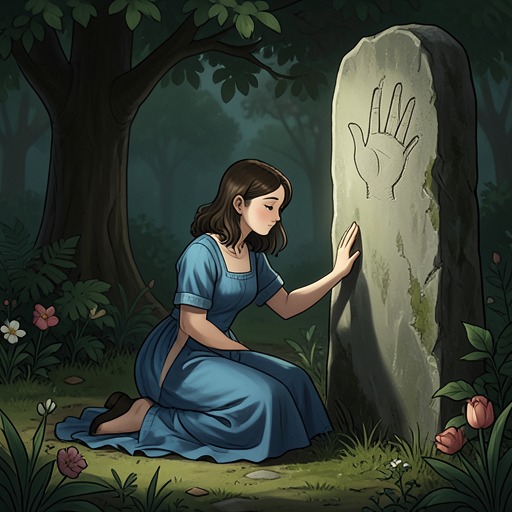
That wish was fulfilled. One day Jordan carried Hester to the garden bench, gathered the roses then in bloom, and laid them over her. She smiled up at him and died. Her grave in Avonlea’s cemetery bears a small brown stone carved with opening gates and records that she was twenty-two; Jordan is buried beside her, but has no gravestone. The contrast between the marker’s brief inscription and Diana’s tender, detailed account shows how a life largely absent from public memory can remain vivid to those who preserve its story.
Garden, Grave, and Remembrance
The garden outlasts the house and the couple’s life together. When Anne first sees it, old paths and the double line of rosebushes still offer traces of its arrangement, while the narcissi have spread over the rest of the ground. The flowers make the abandoned space feel newly alive, but its beauty also carries evidence of time: this was once someone’s home and private refuge, now discovered by visitors who had lived nearby without knowing it was there.
Anne’s connection to Hester continues beyond that first visit. Whenever Anne goes to Matthew Cuthbert’s grave, she also visits Hester’s grave in the poplar-shaded corner of the cemetery and leaves flowers there. On one occasion she brings white roses from Hester’s own garden, choosing them because she believes Hester would prefer them. Later, after a hailstorm has damaged the flowers in Avonlea, Anne regrets that she cannot find June lilies for Hester. She imagines that Hester still loves and remembers her garden, and might feel homesick for it even in heaven. Marilla Cuthbert objects to speaking as though the dead remain attached to earthly places, but Anne’s belief gives the garden and the offerings a continuing emotional life.
Narrative Significance
Hester is known chiefly through what others say and do: Diana tells her story, the garden preserves her presence, and Anne makes a recurring practice of tending her memory. That indirect characterization leaves much of Hester’s inner life unrecorded, while making the affection around her legible through concrete acts. Jordan builds the garden and carries her to it; Anne returns with flowers, including roses gathered from the neglected plot itself.
The garden’s persistence also complicates the novel’s images of rural beauty. Fields, woodland paths, and flowers can offer delight, but the garden is not merely an attractive part of the landscape: it records Hester’s chosen attachment to country life and the care that sustained her there. Later, when the hailstorm destroys blossoms and damages trees across Avonlea, Anne thinks especially of Hester’s garden and the flowers she might have missed. Hester’s story thus joins natural abundance to its vulnerability, while Anne’s visits insist that memory, like the flowers that spread through the old garden, can endure after the life that first gave a place meaning has ended.